Qualities that All Good Bosses Should Have

Being a boss is for the brave. With a seemingly endless list of projects to manage and problems to solve it's easy to feel like you're running an asylum instead of a business! And while most bosses would like to create a dream work environment for their staff, when it comes down to the crunch, it's easy to see that dream as a luxury that the company can't afford…. but you're WRONG.

Despite your greatest fears as a boss about what your employees want, you'd be surprised to discover it's rarely more holidays or even bigger pay checks. That's right, what they crave even more than a day at the beach is a work environment that challenges and inspires them. Truth is, when your team feels valued, understood and their talents are being utilized, the results are sweeter than a mango daiquiri in the sun.

To find out how to create the ultimate work environment in your company we headed to paradise itself, Hawaii, to speak with two women who have a thriving business teaching bosses how to bring a slice of nirvana into the workplace.

Cindy Sakai and Sarah Kalicki-Nakamura are the co-founders of TH!NK, a management consultancy firm that specializes in creating idyllic work environments for companies great and small. The bubbly duo have years of experience in the real world but the title that best describes them is, "Dream Coaches"-- a special form of management training where they help CEOS and managers understand how to create dream work environments (paradise) and get the best out of their employees.

So pack your bags, you're about to get your ticket to paradise.

Paradise=Profit

Creating environments that employee look forward to working in isn't just good for their morale; it's good for your bottom line. Here are the tangibles:
Happy staff = Fewer sick days.
Inspired staff = More dynamic work environment as staff feel safe taking bigger risks.
Empowered employees = Less people saying 'That's not my job'.
Improved communication = Better product and overall service for customers.
Increased job security and satisfaction = Reduced gossiping and need to babysitting interpersonal office relationships.
Longer staff retention = Saves money and time otherwise wasted on training new employees.
Good work environment= Staff work longer hours and with more passion.

Ok, so now you know the benefits of creating a dream work environment but before you start doing the Hula, it's time to address the biggest mistakes bosses make.

Biggest Mistakes Bosses Make
Micromanaging:
Bosses employ experts in their field to do a job but after that many bosses feel that they need to micro manage their employees forgetting that their initial reason for hiring is because of a person's specific strengths and expertise. Let your employees grow and empower them in the position you hire them for.

Thinking paychecks equal passion
A big mistake bosses can make is to mistake that a paycheck equals passion. Passion equals passion. Don't be mistaken that just because you pay your employees that they don't have ambitions and needs as people in a work place. Empower them and excite them, make them feel motivated so that they will work above and beyond their initial roles.

So you know the mistakes but what about some tips on how to fix them. Cindy and Sarah suggest the following.

How to Become a Better Boss

Build trust

Be straightforward, follow through with your decisions and promises and be a reliable boss to your employees.

Know Your People

Take time out to actually talk to your employees. Check up on what they want and take time to talk to your employees on a one on one basis. Trust me, they will feel wanted and will be more willing to work harder for you.

Challenge Yourself

Being self-aware is a big strength and a positive move towards good boss skills. Challenge yourself as a boss to make changes and move forward with new ways to think through strategies and managing your company. If you are moving and changing then you are also helping create a more productive company.

So there you have it - the tips on how to become a good boss and ensure that you and your employees can live the dream in their office. I'll toast to that!

The Wonders of Water: Amazing Secrets for Health and Wellness


Water prevents and helps to cure heartburn.

Heartburn is a signal of water shortage in the upper part of the gastrointestinal tract. It is a major thirst signal of the human body. The use of antacids or tablet medications in the treatment of this pain does not correct dehydration, and the body continues to suffer as a result of its water shortage.
Not recognizing heartburn as a sign of dehydration and treating it with antacids and pill medications will, in time, produce inflammation of the stomach and duodenum, hiatal hernia, ulceration, and eventually cancers in the gastrointestinal tract, including the liver and pancreas.

Water prevents and helps to cure arthritis.
Rheumatoid joint pain - arthritis - is a signal of water shortage in the painful joint. It can affect the young as well as the old. The use of pain-killers does not cure the problem, but exposes the person to further damage from pain medications. Intake of water and small amounts of salt will cure this problem.

Water prevents and helps to cure back pain.
Low back pain and ankylosing arthritis of the spine are signs of water shortage in the spinal column and discs - the water cushions that support the weight of the body. These conditions should be treated with increased water intake - not a commercial treatment, but a very effective one.

Not recognizing arthritis and low back pain as signs of dehydration in the joint cavities and treating them with pain-killers, manipulation, acupuncture, and eventually surgery will, in time, produce osteoarthritis when the cartilage cells in the joints have eventually all died. It will produce deformity of the spine. It will produce crippling deformities of the limbs. Pain medications have their own life-threatening complications.

Water prevents and helps to cure angina.Heart pain - angina - is a sign of water shortage in the heart/lung axis. It should be treated with increased water intake until the patient is free of pain and independent of medications. Medical supervision is prudent. However, increased water intake is angina's cure.

Water prevents and helps to cure migraines.Migraine headache is a sign of water need by the brain and the eyes. It will totally clear up if dehydration is prevented from establishing in the body. The type of dehydration that causes migraine might eventually cause inflammation of the back of the eye and possibly loss of eye sight.

Water prevents and helps to cure colitis.Colitis pain is a signal of water shortage in the large gut. It is associated with constipation because the large intestine constricts to squeeze the last drop of water from the excrements - thus the lack of water lubrication.

Not recognizing colitis pain as a sign of dehydration will cause persistent constipation. Later in life, it will cause fecal impacting: it can cause diverticulitis, hemorrhoids and polyps, and appreciably increases the possibility of developing cancer of the colon and rectum.

Water and salt prevent and helps to cure asthma.Asthma, which also affects 14 million children and kills several thousand of them every year, is a complication of dehydration in the body. It is caused by the drought management programs of the body. In asthma free passage of air is obstructed so that water does not leave the body in the form of vapor - the winter steam. Increased water intake will prevent asthma attacks. Asthmatics need also to take more salt to break the mucus plugs in the lungs that obstruct the free flow of air in and out of the air sacs.

Not recognizing asthma as the indicator of dehydration in the body of a growing child not only will sentence many thousands of children to die every year, but will permit irreversible genetic damage to establish in the remaining 14 million asthmatic children.

Water prevents and helps to cure high blood pressure.Hypertension is a state of adaptation of the body to a generalized drought, when there is not enough water to fill all the blood vessels that diffuse water into vital cells. As part of the mechanism of reverse osmosis, when water from the blood serum is filtered and injected into important cells through minute holes in their membranes, extra pressure is needed for the "injection process." Just as we inject I.V. "water" in hospitals, so the body injects water into tens of trillions of cells all at the same time. Water and some salt intake will bring blood pressure back to normal!

Not recognizing hypertension as one of the major indicators of dehydration in the human body, and treating it with diuretics that further dehydrate the body will, in time, cause blockage by cholesterol of the heart arteries and the arteries that go to the brain. It will cause heart attacks and small or massive strokes that paralyze. It will eventually cause kidney disease. It will cause brain damage and neurological disorders, such as Alzheimer's disease.

Water prevents and helps to cure early adult-onset diabetes.Adult-onset diabetes is another adaptive state to severe dehydration of the human body. To have adequate water in circulation and for the brain's priority water needs, the release of insulin is inhibited to prevent insulin from pushing water into all body cells. In diabetes, only some cells get survival rations of water. Water and some salt will reverse adult-onset diabetes in its early stages.

Not recognizing adult-onset diabetes as a complication of dehydration will, in time, cause massive damage to the blood vessels all over the body. It will cause eventual loss of the toes, feet and legs from gangrene. It will cause eye damage, even blindness.

Water lowers blood cholesterol.High cholesterol levels are an indicator of early drought management by the body. Cholesterol is a clay-like material that is poured in the gaps of some cell membranes to safeguard them against losing their vital water content to the osmotically more powerful blood circulating in their vicinity. Cholesterol, apart from being used to manufacture nerve cell membranes and hormones, is also used as a "shield" against water taxation of other vital cells that would normally exchange water through their cell membranes.

10 Ways To Keep Kids Safe……

 1-  Make sure your kids do NOT eat any candy, before the ‘Mommy’ or ‘Daddy’ inspection, no matter their age. 
You don’t want to freak little ones out, into thinking every one of the doors they knock on, has someone behind it, that may try and poison them, or stick something terrible inside of their candy, but you want to make the possibility known, that it has happened, and to be safe, let mom or dad check out, every piece of candy before eating it.


2- Stay outside of people’s doors!  Never allow your child to walk inside someone’s home, & advise bigger kids to keep out as well!
 I know I had a major issue with my daughter with this, last year.  She was 4 yrs old, seriously too friendly, and was trying to make her way inside several homes,
usually containing a cat or dog, in her range of view. 
 Tell your kids, strangers are just that… strangers, so unless it’s a friend’s house, never enter into anybody’s home. Stand back away from the door after knocking, collect your candy, say a polite thank you, and make your way to the next home
Those are words for kids to live by! 
  Now is a good time to refresh your child’s memories on the stranger talks, you have had with them
3-  Wear brightly colored costumes
Especially if your trick or treaters are a little bit older, and want to venture out with their friends, and are not in your sights.  It not only will make your child stand out to you, and other people walking around, but will also keep them in view of driver’s, especially if they are out after sunset.

If your child has chosen a costume, and it happens to not be brightly colored, you can add reflector strips to their clothing and trick or treating bag.  Tweens may think you are crazy, just let them know you have their best interests at heart.


4-  Keep older kids out, with a group of friends.
  There truly is strength in numbers, and knowing that your child is amongst a group of children their own age, trick or treating, will help keep you more at ease, for certain. 

Protect your kids as best you can, to make Halloween, a happy occasion for all.  Make sure ground rules are set, and abided by, for a safe and pleasant afternoon/ evening.  This is a day where the more, the merrier, and the more, the better mom will feel!  Encourage trick or treating with friends if you are no longer ‘Cool’ enough to hang out with.
(We always knew that day would come, didn’t we?) :lol:


5- Teach your kids about the rules of the road. 
Make sure they look both ways before crossing the street.  Even if in groups, if no one is looking, and a car speeds by, it could be tragic, so make sure they know to abide by the rules of the road, by checking out all oncoming traffic in both directions, and stick to brightly lit areas, and use the side walks as much as possible, avoiding walking in the road, except for crossing.

 Tell your kids to listen to oncoming traffic, not just the stop signs, and red lights, because not all drivers adhere to the rules of the road.  Encourage them to always be aware of what is going on around them.


6-  Avoid any houses that are not lit,  and/or don’t seem ‘Halloween friendly’. 
Some houses you can easily tell are Halloween friendly.  They are brightly lit up, and there are decorations all around, but sometimes you see a house, and I remember being a kid, that is dark, scary looking, and sometimes me and my friends would be afraid to walk up to the door, and better off for that.  Don’t bother. 

Likely, the people inside aren’t interested in people knocking, and have made their houses look dark for a reason, so why not move along to the next home?  Plus, staying in brightly lit areas only, is the best way to keep your trick or treaters safe.  Skip any house that doesn’t look, or feel right.  Gut feelings are usually correct!  There are plenty of friendly houses to trick or treat at, just encourage your child to move on along.

Also be sure and set boundaries.  People don’t appreciate 9:30 pm knocks on the door, come Halloween evening.  A lot of them need to work the next day, so make sure your kids are being courteous.  Plus, the later it gets, the less safe the streets become.  Give your older child a strict ‘Halloween curfew’ to follow, so they stay safe, and are off of the streets when it starts to get real late. 

  
7-  Arm your kids with safety equipment
By this I am referring to, flashlights, glow sticks, and even cell phones for the bigger kids, who are out and about with their friends, so you can reach them.  

(So much better then back in my day…The day of the ‘Beeper’, but where was the phone, to call back on :-)
Now there is NO excuse not to answer.  This is a definite MUST in my book.  Always better to be safe!


8-  Escort your little ones to the door, or always have an older sibling do so, if not yourself. 
Never let your toddlers & young children, go it alone.  In today’s day and age, we never want to take any chances with strangers, and also they may not see a hazard in front of them, and fall, injuring themselves, or falling down porch stairs.  Always best to have a proper age escort, bring them up to every door they trick or treat at.


9- Keep away from baggy clothing, and over sized shoes, or ‘Clunky’ shoes on your kids. 
 They can become stuck on something, a branch, Halloween decoration, or a screen door.  Or your child can trip over their own feet, not to mention large cracks in the side walk, pot holes while crossing the street, and more.  Costume safety is important, make sure your child is properly dressed, and ready for fun!

*This warning includes those little princess costume heels, for toddlers & small girls!  Those spell danger in my book.  Forgo the heels on little ones!  I don’t even find those safe, inside of the home*


10-  As a parent yourself, in choosing the perfect Halloween candy to gave your own trick or treaters, be smart about your candy choices!
Go for a larger piece of candy to dispense, vs. say a small mint, jolly rancher, gum balls etc.  These can pose as choking hazards to very young children, so always buy larger, like mini sized candy bars are always a hit at my home, Reece’s Pieces, Blow Pops, etc.

Everybody stay safe, hopefully enjoy pleasant weather this year, and happy trick or treating to all. 
Enjoy!

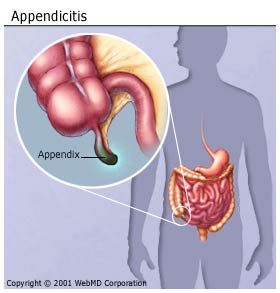
Appendicitis


Appendicitis is an inflammation of the appendix, a 3 1/2-inch-long tube of tissue that extends from the large intestine. No one is absolutely certain what the function of the appendix is. One thing we do know: We can live without it, without apparent consequences.
Appendicitis is a medical emergency that requires prompt surgery to remove the appendix. Left untreated, an inflamed appendix will eventually burst, or perforate, spilling infectious materials into the abdominal cavity. This can lead to peritonitis, a serious inflammation of the abdominal cavity's lining (the peritoneum) that can be fatal unless it is treated quickly with strong antibiotics.
appendix

Sometimes a pus-filled abscess (infection that is walled off from the rest of the body) forms outside the inflamed appendix. Scar tissue then "walls off" the appendix from the rest of the abdomen, preventing infection from spreading. An abscessed appendix is a less urgent situation, but unfortunately, it can't be identified without surgery. For this reason, all cases of appendicitis are treated as emergencies, requiring surgery.
In the U.S., one in 15 people will get appendicitis. Although it can strike at any age, appendicitis is rare under age 2 and most common between ages 10 and 30.
What Causes Appendicitis?
Appendicitis occurs when the appendix becomes blocked, often by stool, a foreign body, or cancer. Blockage may also occur from infection, since the appendix swells in response to any infection in the body.

What Are the Symptoms of Appendicitis?
The classic symptoms of appendicitis include:
  • Dull pain near the navel or the upper abdomen that becomes sharp as it moves to the lower right abdomen. This is usually the first sign.
  • Loss of appetite
  • Nausea and/or vomiting soon after abdominal pain begins
  • Abdominal swelling
  • Fever of 99-102 degrees Fahrenheit
  • Inability to pass gas
Almost half the time, other symptoms of appendicitis appear, including:
  • Dull or sharp pain anywhere in the upper or lower abdomen, back, or rectum
  • Painful urination
  • Vomiting that precedes the abdominal pain
  • Severe cramps
  • Constipation or diarrhea with gas
If you have any of the mentioned symptoms, seek medical attention immediately since timely diagnosis and treatment is very important. Do not eat, drink, or use any pain remedies, antacids, laxatives, or heating pads, which can cause an inflamed appendix to rupture.
How Is Appendicitis Diagnosed?
Diagnosing appendicitis can be tricky. Symptoms of appendicitis are frequently vague or extremely similar to other ailments, including gallbladder problems, bladder or urinary tract infection, Crohn's disease, gastritis, intestinal infection, and ovary problems.
The following tests are usually used to make the diagnosis.
  • Abdominal exam to detect inflammation
  • Urine test to rule out a urinary tract infection
  • Rectal exam
  • Blood test to see if your body is fighting infection
  • CT scans and/or ultrasound
How Is Appendicitis Treated?
Surgery to remove the appendix, which is called an appendectomy, is the standard treatment for appendicitis.
If appendicitis is even suspected, doctors tend to err on the side of safety and quickly remove the appendix to avoid its rupture. If the appendix has formed an abscess, you may have two procedures: one to drain the abscess of pus and fluid, and a later one to remove the appendix.

Appendectomy: What to Expect

Antibiotics are given before an appendectomy to fight possible peritonitis. General anesthesia is usually given, and the appendix is removed through a 4-inch incision or by laparoscopy. If you have peritonitis, the abdomen is also irrigated and drained of pus.
Within 12 hours of surgery you may get up and move around. You can usually return to normal activities in two to three weeks. If surgery is done with a laparoscope (a thin telescope-like instrument for viewing inside the abdomen), the incision is smaller and recovery is faster.
After an appendectomy, call your doctor if you have:
  • Uncontrolled vomiting
  • Increased pain in your abdomen
  • Dizziness/feelings of faintness
  • Blood in your vomit or urine
  • Increased pain and redness in your incision
  • Fever
  • Pus in the wound
Can Appendicitis Be Prevented?
There is no way to prevent appendicitis. However, appendicitis is less common in people who eat foods high in fiber, such as fresh fruits and vegetables.

Importance of water in your body


Drinking water can help you loose weight
Studies suggest that water could be a helpful in losing weight. A recent study suggested that by drinking water, overweight dieting women were able to promote weight loss by lowering total caloric intake and/or changing their metabolic rate. Another study showed that middle-aged and older women who drank water before a meal consumed fewer calories -- presumably because they already felt full -- and, consequently, they lost weight.

You may be dehydrated if your urine looks like Concentrated apple juice
An easy way to monitor your hydration level is to check the color of your urine. The darker your urine, the less hydrated you are. Drink enough fluids to keep your urine a lighter color. If your urine is clear or pale, chances are you are well hydrated.
Other practical ways to monitor your hydration status include keeping an eye on your body weight (you lose weight as you lose water) and perspiration (the more you perspire, the more water you're losing).Both studies were short-term, however, and it's unknown if the results would have held up over a longer period of time.

How much water does the average adult lose every day through natural bodily functions?

You lose about 10 or more cups of water every day just living -- breathing, sweating, urinating, etc. That amount of water loss is usually replaced by normal levels of daily eating and drinking.


The amount of fluid you need to stay properly hydrated depends on:

The amount of fluid you need depends upon a number of factors, including:

  • Age: Children need more fluids because they produce more urine. Older people may need more fluids because of specific health conditions or because they tend to lose their sense of thirst.
  • Gender: Men need more fluids than women. (And pregnant women need more fluids than other women.)
  • WeightHeavy people need more water.
  • Health: Diseases such as diabetes, cystic fibrosis, and kidney disease can increase your need for fluids.
Environment: You need more fluids in extreme weather conditions (especially hot, humid, or cold) and at high altitudes.

Which of the following beverages is considered to be the most dehydrating?


Alcoholic beverages have the most dehydrating effect, but most other beverages contribute to your overall level of hydration. Coffee and other caffeinated beverages do have some diuretic effect, causing your kidneys to form urine. But they are generally hydrating because of their water content. Juices, sodas, and other sugary beverages also are hydrating. Water is usually a better choice for hydration because it doesn’t contain additional calories.


Exercise in hot, humid conditions can cause significant dehydration in as quickly as


It doesn't take long to get dehydrated -- especially in hot, humid weather. The National Athletic Trainers’ Association advises delaying or rescheduling vigorous outdoor exercise when it’s too hot and humid. Alternatively, you should take longer breaks, reduce the duration and/or intensity level, and make sure you're wearing minimal clothing or exercise gear.

How much of the average person's daily water intake is from food?


Moisture in food accounts for about 20% of the average person's total daily water intake. An apple is 84% water. Bananas are 74% water. Broccoli is 91% water. Even foods that you might not think of as particularly moist -- a plain bagel (33% water), ground beef (56%), American cheese (39%) -- help your body meet its hydration needs.


How much water should you drink per day?


There's no evidence for the oft-repeated assertion that people need at least eight glasses of water per day. The Institute of Medicine recommends that men consume the equivalent of about 125 ounces of water daily and that women consume about 91 ounces -- but that includes water intake from all foods and beverages. Most people get adequate hydration without "purposeful drinking" of fluids for hydration. According to the U.S. government's "Dietary Guidelines for Americans," "purposeful drinking" is only necessary for people "who are exposed to heat stress or who perform sustained vigorous activity."


People should avoid beverages and snacks with sodium when they're trying to rehydrate.

Sodium is something your body needs when you're trying to rehydrate – either during or after exercise. That’s why sports drinks are often rich in sodium -- one of the “electrolytes” your body loses during exercise. Drinks and snacks with sodium also can stimulate thirst and help you retain fluids. Too much salt, however, can increase your blood pressure and worsen heart conditions in some people.


You can't drink too much water while exercising.

It is possible to drink too much water. While normally functioning kidneys in an adult can process anywhere from 20 -1000 ml of fluid per hour, it's not easy to overload them -- but it can be done. Excessive amounts of water, especially over a short period of time, can be life-threatening. Symptoms of too much water include weight gain, bloating, nausea, and vomiting. Acute cases of water intoxication can cause low blood sodium, which can result in headaches, confusion, seizures, and coma.

The International Marathon Medical Directors Association recommends that athletes drink no more than 31 ounces of water per hour during extended exercise.


Water helps your body:

There is water in every cell, tissue, and organ in your body. It helps transport nutrients, get rid of waste, keep your temperature at the right level, lubricate and cushion joints, keep your skin moisturized, and help with lots of other essential functions.


An early warning sign of dehydration is Thirst

   Thirst is one of the first warning signals you may be getting dehydrated, but you should not rely on thirst alone. Other early signs are: fatigue, flushed skin, faster breathing and pulse rate, and decreased exercise capacity. Later signs include weakness, dizziness, and labored breathing. Experts say that thirst occurs when at least 2% of your body weight is lost as sweat. Hydrating before and during strenuous activity is important.If you think you're becoming dehydrated, you should move to a cool place and rehydrate. Drink fluids slowly, rather than quickly -- drinking too fast can stimulate urination, resulting in less hydration


Hiccups

 Topic Overview
 What are hiccups?
Hiccups occur when a spasm contracts the diaphragm, a large sheet of muscle that separates the chest cavity from the abdominal cavity. This spasm causes an intake of breath that is suddenly stopped by the closure of the vocal cords (glottis). This closure causes the characteristic "hiccup" sound.
What causes hiccups?
A very full stomach can cause bouts of hiccups that go away on their own. A full stomach can be caused by: Eating too much food too quickly. Drinking too much alcohol, Swallowing too much air, Smoking. A sudden change in stomach temperature, such as drinking a hot beverage and then a cold beverage, Emotional stress or excitement.
How long do hiccups last?
Hiccups usually stop within a few minutes to a few hours. Hiccups that last longer than 48 hours are called persistent hiccups. Hiccups that last longer than a month are called intractable hiccups. While very rare, intractable hiccups can cause exhaustion, lack of sleep, and weight loss. Both persistent and intractable hiccups may be a sign of a more serious health problem and must be checked by a doctor. There are many known causes of persistent or intractable hiccups, including: Central nervous system problems, such as cancer, infections, stroke, or injury. Problems with the chemical processes that take place in the body (metabolic problems), such as decreased kidney function or hyperventilation. Irritation of the nerves in the head, neck, and chest (vagus or phrenic nerve). Anesthesia or surgery. Mental health problems.
How are hiccups treated?
Most bouts of hiccups go away on their own within a few minutes to a few hours and do not require any treatment. Many home remedies are used to treat hiccups. Most of them involve increasing the level of carbon dioxide in the blood, which usually stops hiccups. Some of these remedies include:

  •  Holding your breath and counting slowly to 10. 
  • Breathing repeatedly into a paper bag for a limited period of time.
  •  Quickly drinking a glass of cold water. 
  • Eating a teaspoon of sugar or honey. 
The treatment for persistent or intractable hiccups depends on the underlying cause of the hiccups and may range from medicine to acupuncture or hypnosis. Sometimes several treatments may be tried before persistent or intractable hiccups are controlled. If you have hiccups that last a few days or longer, your doctor may conduct tests to rule out a more serious problem. 
Who is affected by hiccups? 
Hiccups affect males more often than females. Hiccups occur in practically every human being, including babies and older adults.

50+: Live Better, Longer

Healthy Body
Be good to your body: it has worked hard for you for years. Here you’ll find head-to-toe tips to help your body keep on keeping on -- and keep on getting better.

Eating Right 
Good Nutrition for Healthy Aging
 As you get older, good nutrition plays an increasingly important role in how well you age.
The Anti-Aging Diet
 Can what you eat help you age gracefully?
Staying Active
Getting Fit for Life
 Here's why it's important to get physical activity at any age.
 Fitness After 50
 Baby boomers are flocking to fitness centers in record numbers.
 Video: Mature Fitness
A fit, mature adult may be healthier than a couch-potato youngster. This video features gyms for people age 40 and older. The ancient Chinese martial art of tai chi may be good for your balance. Learn why.
10 Timely Workout Tips
 You’re too busy to waste time -- so get tips on efficient workouts.
 Over 40 and Active? Avoid 'Boomeritis'
 Staying active is healthy at any age. Pick up some tips to stay injury-free after 40.
Looking Good
What's Giving Away Your Age?
 Birthdays happen, but looking older is optional. Here's how to take years off -- without keeping your hands in your pockets. Get the facts on wrinkles, age spots, and skin conditions that become more common with age.
Video: Make Hands Look Young
 This video features a woman who gets plastic surgery to plump up her hands.
Help for Hair Loss 
 What causes you to lose your hair? And what can you do about it?
The ABCs of Premature Graying
 Why some of us are destined to sport the 'distinguished' look early.
 Healthy Sleep
Sleep and Aging 
Several factors may contribute to the inability to sleep well as we get older.
Women’s Sleep Advantage
 Find out about a sleep perk for women that comes with age.
Related Guide: Sleep Disorders Guide
 Can’t sleep? Get information on sleep disorders. This link takes you to WebMD’s Sleep Disorders Guide.
Prevention 
Health Check: What Is Your Cancer Risk?
 Learn your risk for five of the most common cancers.
 Cataract Health Center 
 If you're looking for cataract information, WebMD's Cataract Health Center has all the information you need.
 Tool: Hearing Loss Quiz 
Take this quiz to find out how well your hearing is holding up.
Video: Tips for Choosing a Hearing Aid
 Do you know someone who’s in the market for a hearing aid? This video provides tips on choosing a hearing aid.


Relieving Constipation 
Eat Healthy to Avoid Constipation
 Find out how exercise and healthy eating habits may help ease constipation.
Aging and Digestive Health
Getting older has pluses and minuses. On the plus side, you get more time to relax and enjoy life. On the minus side lie many health challenges -- including an increase in digestive health disorders. Of course, problems with digestion can occur at any age. Yet nearly 40% of older adults have one or more age-related digestive symptom each year.

Here's an overview of common digestive health problems that may arise with age. Learn why they occur and what you can do to keep your digestive system running smoothly well into your later years.

Digestive Problems as You Age
Constipation. 
One of the most common things we see, certainly as people are getting into their 60s and 70s, may be a change in bowel habits, predominantly more constipation," says Ira Hanan, MD, associate professor of medicine at the University of Chicago Medical Center. Symptoms include difficult or painful bowel movements, infrequent bowel movements, and hard, dry stool. There are a number of age-related factors that can cause constipation in older adults.

Changes in the digestive system.
Your digestive system moves food through your body by a series of muscle contractions. Just like squeezing a toothpaste tube, these contractions push food along your digestive tract, Hanan says. As we age, this process sometimes slows down, and this can cause food to move more slowly through the colon. When things slow down, more water gets absorbed from food waste, which can cause constipation.

Medication use.
Older adults take a lot of medications, says Ellen Stein, MD, an assistant professor of medicine at Johns Hopkins Hospital in Baltimore, MD. And as we age, we start to have more health problems that require medications. Several common medications can cause constipation. One example is calcium channel blockers, used for high blood pressure. "Very good for blood pressure, very constipation causing," says Stein. Narcotic pain relievers are another common culprit. An older adult who has knee or hip replacement surgery will often be given narcotics for pain. "Narcotics have effects directly on the bowel," Stein tells Web MD. "They actually slow the gut."

Inactivity. 
People often become less active as they age, says Stein, and being inactive can make you constipated. Bed rest during an illness can cause real problems. If a person has joint-replacement surgery, for example, it takes time to recover and be fully active again. Add narcotic pain relievers to the mix, and "that might change manageable constipation into something that's much more of a problem," Stein says.

Not drinking enough fluids.
Staying hydrated helps prevent constipation at any age. It can become more of an issue for older adults who take diuretics for high blood pressure or heart failure. Diuretics lower blood pressure by causing you to lose excess fluid by urinating more often. Some people may avoid drinking too many fluids so they don't have to run to the bathroom all day long. Between urinating more and drinking less, you can become dehydrated.

Diverticular Disease.
About half of people age 60 and older have diverticulosis. This occurs when small pouches in the lining of the colon bulge out along weak spots in the intestinal wall. While many people don't have any symptoms, gas, bloating, cramps, and constipation may occur. "I tell my patients its part of the aging of the colon," Hanan tells WebMD. "As we get older, we're more prone to developing these pockets." Why they occur with age is unclear, he says. While most of the time they don't cause a problem and don't require treatment, they can cause scarring and irregularity. If the pockets become inflamed, it's called diverticulitis, which can cause abdominal pain, cramping, fever, chills, nausea, and vomiting. Antibiotics, pain medications, and a liquid diet treat diverticulitis.

Ulcers &NSAIDs.
Many older adults use nonsteroidal anti-inflammatory drugs (NSAIDs) to control pain from arthritis and other types of chronic pain. Regular use of NSAIDs increases the risk for stomach bleeding and ulcers. So while aging alone doesn't make your stomach more prone to ulcers, the chronic use of NSAIDs does raise your risk. More often than not older patients don't have pain from ulcers, says Hanan, but they can have painless gastrointestinal (GI) bleeding. If you notice any type of stomach bleeding, such as vomiting blood, passing dark stools, or noticing blood when you wipe, tell your doctor right away.

Problems with the mouth and esophagus.
The esophagus is the tube that connects our mouth to our stomach. Like the colon, the esophagus can also slow down with age, moving food through more slowly. This can cause problems swallowing food or fluids. Dementia, stroke, and conditions such as Parkinson's disease can also cause difficulty swallowing.

Polyps. 
After age 50, the risk increases for developing polyps, or small growths, in the colon. Polyps may be noncancerous, they may become cancer, or they may be cancer. "We don't know what causes polyps," Hanan says. There's been speculation that it's something in the diet or something we don't get enough of, plus genetics. It's probably a cumulative effect over the years, he says. You can have polyps and not know it because they usually don't have any symptoms. "That's why screening colonoscopies are recommended for anyone over the age of 50," Hanan tells WebMD. During this procedure, polyps can be removed before they become cancer. People with a family history of colon cancer or other risk factors may need to have screenings earlier.

GERD.
Gastroesophageal reflux disease (GERD) is the most common upper GI disorder in older adults, although people of all ages can get it. GERD occurs when stomach acid backs up into the esophagus, causing heartburn and other symptoms. Heartburn is more common as you get older, says Stein, but it's often caused by factors not related to aging. Eating late at night and eating the wrong types of foods, such as fast food and fried foods, can all cause reflux. Certain medications, including some blood pressure medications, which many older adults take, can cause heartburn. Obesity increases your risk for heartburn and GERD, so if you gain weight as you get older, you could have more reflux.
1 2

Living with chronic Gouts


Slideshow: Gout: Foods that Help, Foods that Hurt

Increase Fluids

Changing your diet may help you manage chronic gout and help reduce symptoms such as joint pain. Start by increasing your fluid because dehydration might trigger gout attacks. One study showed that men who drank 5 to 8 glasses of water in a 24-hour period had a 40% reduced risk of gout attacks. But avoid sugary sodas, which may increase your risk.

Stroke Health Center


Overview & Facts

Start your stroke search here. These links start with basic facts and go on to short discussions of stroke causes and risk factors.
What Is Stroke?
Stroke Basics

A stroke is an emergency. Get the basic facts here.
What Happens During a Stroke 

Click here for a brief account of what goes on in your brain during a stroke.
Causes
Stroke Causes

What can cause strokes to happen? Find out here.


Are You at Risk?
Stroke Dangers

Evaluate your personal health and your risks for 5 big health problems.
What Increases Your Risk for Stroke

Are you at increased risk for stroke? Find out here.
Prevention
Stroke Prevention

Controlling risk factors and certain medical conditions can improve your chances of avoiding a stroke. Click here to get started.


Symptoms & Types

Do not miss the articles in this section. This information on the warning signs, symptoms, and types of stroke could save your life or the life of a loved one.

Symptoms

You really, really should know the general symptoms of stroke. Go ahead -- click here.
There are different types of stroke that can have different causes. This link takes you to an outside site.

When to Call A Doctor

Read this article now. It's a brief list of the symptoms that signal a stroke emergency.

Diabetes Health Center

Tools & Resources

News and Features Related to Diabetes

  1. People With Diabetes May Need Earlier Colon Screen
    May 22, 2012 -- Should people with diabetes be screened for colon cancer at younger ages than is usually recommended? That may very well be the case, say researchers who found that people in their 40s with type 2 diabetes are about as likely to have precancerous colon growths called adenomas as peop
    Read Full Article
  2. Death Rate Dropping for People With Diabetes
    May 22, 2012 -- New research shows that people with diabetes are living longer, and this is likely due to heart-healthy habits and tighter control of blood sugar levels. Many people may only associate diabetes with vision loss, kidney disease, and limb amputations, but it also increases the risk for
    Read Full Article
  3. Type 2 Diabetes in Kids a Challenge to Control
    April 29, 2012 -- The obesity epidemic has created a generation of children and teens who have type 2 diabetes, and a new study hints that the solution to this problem is not going to come easily. Because type 2 diabetes among children is a relatively recent development, many treatment decisions hav
    Read Full Article
  4. Consumer Group to FDA: Take Victoza off the Market
    April 20, 2012 -- Public Citizen, the Washington, D.C.-based consumer advocacy group, is petitioning the FDA to immediately remove the type 2 diabetes drug Victoza (liraglutide) from the market. The petition claims that the injectable medication puts patients at risk of thyroid cancer, pancreatitis,
    Read Full Article
  5. Phthalates May Double Diabetes Risk
    April 12, 2012 -- Phthalates (pronounced thal-ates), those common chemicals found in cosmetics, scented candles, and plastics, may increase the risk of developing type 2 diabetes. Previous studies of phthalates have mainly focused on how they affect reproductive health and child development. These c
    Read Full Article
  6. Have Diabetes? Lifestyle Changes May Help Mobility
    March 28, 2012 -- Losing weight and exercising may help people with type 2 diabetes hold on to their mobility as they age, a new study shows. The good news is that neither lifestyle change requires drastic measures. The study, published in the New England Journal of Medicine, shows that losing just
    Read Full Article
  7. White Rice Linked to Diabetes Risk
    March 15, 2012 -- Eating white rice regularly, as is commonly done in many Asian countries, may increase risk for developing type 2 diabetes, a new study shows. Researchers looked at data from four studies: two in Asian countries (China and Japan) and two in Western countries (the U.S. and Australia
    Read Full Article
  8. Stroke Risk Triples After a Decade With Diabetes
    March 1, 2012 -- The longer a person has diabetes, the higher their risk of having a stroke, according to a new study. The risk for stroke is known to be two to four times higher among people with diabetes compared to people who don’t have the disease. What has been less clear is whether that risk p
    Read Full Article
  9. Weekly Shot Gets FDA Nod for Type 2 Diabetes
    Jan. 27, 2012 -- The FDA has given its nod to Bydureon, making it the first weekly treatment for type 2 diabetes, according to drug's manufacturer.   Given as a shot, Bydureon (pronounced by-DUR-ee-on) is the long-acting form of Byetta, a twice-daily injection. It works by stimulating pancreas cells
    Read Full Article
  10. CDC: Big Drop in Diabetes Amputations
    Jan. 24, 2012 -- There has been a dramatic drop in the rate of diabetes-related amputations in the U.S., and experts attribute the improvement to better management of risk factors that lead to the loss of feet and legs. The amputation rate declined by 65% among adults with diabetes in a little over
    Read Full Article
Displaying 1 - 10 of 917 Articles Page 1 2 3 4 5 6 7 8 9 10 Next >>
Diabetes Health Center
Tools & Resources
After a Heart Attack                      A Diet To Lower Cholesterol
A Visual Guide to Heart Disease    Test Your Cholesterol Smarts Exercising for a Healthy Heart        Heart-Healthy Living With Diabetes


Symptoms & Types


Symptoms

Symptoms of Heart Disease


There are many types of heart disease. Here's where to get quick facts


 on each one -- including warning signs and symptoms.
Here's a fast, easy-to-understand guide to the symptoms of each type of heart disease.


Warning Signs

When to Call the Doctor


If you or a loved one has heart disease, when must you call the doctor?

When should you head for the emergency room? Click here for clear, fast


 information.

Related Web Site: Heart Attack Warning Signs


Don't wait, click here for heart attack warning signs. For easy reference


you'll also find stroke and cardiac arrest warning signs -- and no-nonsense 


advice on what to do now. This link will take you to the American Heart 


Association.

Related Web Site: Women and Heart Disease Symptoms


Women are more likely than men to have a heart attack without chest 


pain. Read more data on gender-specific heart disease. This link takes 


you to another web site.

Angina


Doctors call it angina pectoris. You call it chest pain. It may feel like 


indigestion -- or like an elephant just stepped on your chest. Here's what it 


means.


Types

Coronary Artery Disease


Coronary artery disease is America's No.1 killer, affecting more than 13 


million Americans.

Enlarged Heart (Cardiomegaly)

An enlarged heart (cardiomegaly) can have various causes. But it's usually


caused by high blood pressure (hypertension) or coronary artery disease.

Tool: CAD


View this illustrative guide to coronary artery disease.

Heart Attack


You know there's nothing funny about a heart attack. There's a lot more to 


learn. Here's what you need to know: no more, no less.

Irregular Heart Rhythm


Irregular heart rhythm -- arrhythmia -- is when your heart doesn't keep up 


a good beat. Learn what it means here.

It's the most common kind of irregular heart beat. Here's where to find out 


what it is, and what to do about it.

Tool: Heart Rhythm Disorders


Irregular heart rhythms can cause the pumping function of the heart to fail. 


See how

Heart Valve Disease


You may not know what a heart valve is -- until it stops working right. It's 


a common form of heart disease. Here's an illustrated guide.

Sudden Cardiac Death


This is the cause of half of all heart disease deaths. Find out why here.

Congenital Heart Disease


Not everyone gets heart disease. Some are born with it. Here are the 


facts on congenital heart disease.

Enlarged Heart (Cardiomegaly)


Learn the causes, symptoms, and treatment of an enlarged heart.

Heart Muscle Disease (Cardiomyopathy)


Heart muscle disease -- what doctors call cardiomyopathy -- is as serious 


as it sounds. Here's a brief overview.

Dilated Cardiomyopathy


Symptoms of DC --dilated cardiomyopathy -- can appear at any age. 


Learn to recognize them here.

Hypertrophic Cardiomyopathy


HCM -- hypertrophic cardiomyopathy -- is a thickening of the walls of the 


heart. Here's a brief overview.

Restrictive Cardiomyopathy


Restrictive cardiomyopathy is the rarest form of heart-muscle disease. Here's an overview.

Pericarditis


Did you know that your heart is held by a little sac? That sac -- the 


pericardium -- can get infected. It's called pericarditis or pericardial 


disease. Here's more.

Pericardial Effusion


Fluid around the heart can be caused by various types of 


infection/inflammation or cancer, kidney disease or heart surgery. This 


fluid can impair heart function. Read more in this technical article written 


for doctors.

Marfan Syndrome


This inherited genetic defect weakens connective tissues -- including those 


in the heart. Click here to learn more.